AI Closes Its Doors: The April 2026 Privatization Inflection
Three things happened in April 2026 that looked unrelated:
- Anthropic announced its most capable model — Claude Mythos — will not ship publicly. In internal testing Mythos independently found "thousands of zero-day vulnerabilities" across major operating systems, triggering Anthropic's ASL-4 safeguard regime. It was moved into a closed program called Project Glasswing whose partners are AWS, Apple, Cisco, CrowdStrike, Google, JPMorgan, Microsoft, Nvidia, and Palo Alto Networks.
- Isomorphic Labs launched IsoDDE — the de facto AlphaFold 4, with more than 2× AF3 accuracy on protein–ligand binding — and kept the methodology closed. It ships only through 17 proprietary drug programs with J&J, Lilly, and Novartis, with the first AI-designed oncology molecule entering Phase I.
- OpenAI capped Abilene Stargate at 1.2 GW and paused Stargate UK entirely after grid-delay talks with Oracle broke down. Industry trackers estimate roughly 7 GW of the 12 GW of planned 2026 US AI capacity has now slipped or been cancelled.
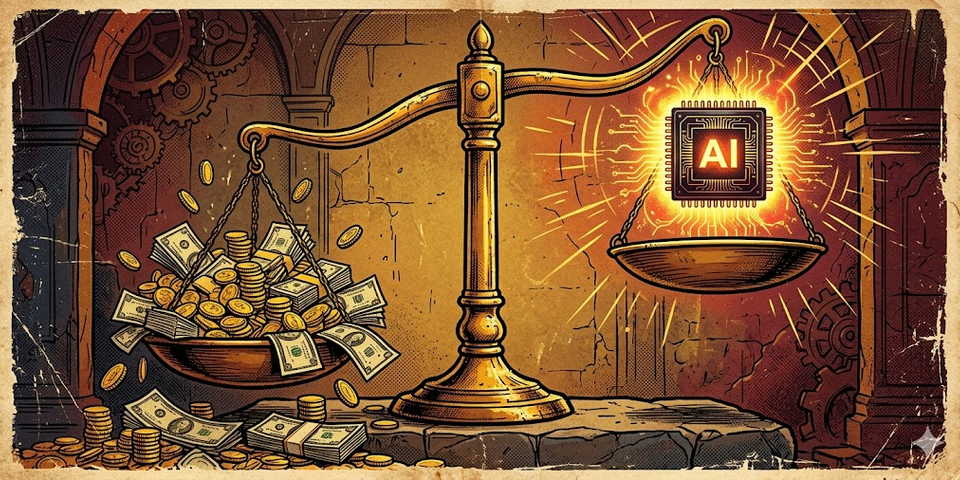
On a single timeline, this isn't a slowdown. It's privatization. Frontier capability is leaving the public domain through three separate doors: safety tier, enterprise contract, and grid physics.
1. Mythos: The First Frontier Model Withheld on Capability-Danger Grounds
Mythos isn't a product. It's a precedent: for the first time, a frontier lab voluntarily withheld a flagship model because its capabilities crossed an internal danger threshold.
The trigger was autonomous cybersecurity: the number of zero-days Mythos surfaced internally activated ASL-4 in Anthropic's Responsible Scaling Policy. Unlike past releases — which used delays or added guardrails — this is a structural refusal to ship. The replacement is Project Glasswing, a closed partner group of twelve critical-infrastructure buyers (cloud, endpoint, finance, networking, cybersecurity).
Second-order effects:
- Regulatory precedent. "What if a future model is too dangerous to release" was a hypothetical until April. Now it's a data point. EU AI Act Article 55 GPAI obligations (compliance deadline August 2, 2026) suddenly have something concrete to attach to.
- Market tiering. Frontier capability is becoming something you reach through contract, audit, and physical isolation. This isn't the old "open vs. closed" axis — it's reachable vs. unreachable.
- Competitive pressure. When OpenAI or Google next trigger ASL-4-class capability, they either match Anthropic's posture or wear the "irresponsible" label. First mover sets the rule.
2. Anthropic Overtakes OpenAI — Coding Agents Are the Hidden Winner
The financial disclosure in April is what actually scrambles the narrative:
- [Anthropic ARR ~9B at end-2025 — ~30× in 15 months). 1,000+ enterprises spending over $1M/year on Claude.
- OpenAI just raised 852B valuation. ARR ~2B/month.
- Secondary markets reportedly offered Anthropic at $800B. Anthropic declined.
ChatGPT still dominates consumer mindshare. But the enterprise cash cow is Claude's dominance in coding agents. Cognition's Scott Wu publicly called Opus 4.7 "clearly optimized for long-horizon autonomy." Claude Code swapped in Opus 4.7 as the default on launch day (April 23).
The scaling problem hiding inside this number:
Long-horizon agentic work isn't a benchmark problem — it's a revenue problem.
On SWE-EVO (average 21 files × 874 tests, multi-file evolution tasks), GPT-5.4 + OpenHands scores 25%. SWE-bench Verified on the same model is 72.8%. The long-horizon gap is ~50 points wide. Whoever closes it keeps the enterprise contracts.
Opus 4.7's new primitive is task budgets: the model sees a running token countdown and re-plans against it. This is the first productized agent self-pacing mechanism. It sounds simple, but it converts "runaway agent" from a probability problem into an engineering one. Any long-horizon task can now carry a hard budget; overruns trigger re-plan or early checkpoint.
3. Stargate Hits the Grid
The most important structural shift of April: the AI growth story stopped being about chips and became about watts.
- Abilene was cut from a planned 3 GW to 1.2 GW. Oracle walked on the operator deal; Meta is reportedly interested in the leftover capacity.
- Stargate UK paused outright, citing energy cost.
- Nvidia Blackwell systems are ~1M, sold out through mid-2026.
The bottleneck isn't total supply. It's timing. Nvidia's shipment calendar runs to 2027. 1 GW grid interconnects average 4–6 years. That means 2026–2027 AI capex is physically capped unless the energy side catches up: SMR permits, iron-air storage, fission revival.
IsoDDE fits the same frame. Closed AlphaFold 4 isn't commercial pettiness. It's that frontier bio is fighting for the same scarce resources — compute, power, specialist data — as frontier code. Any capability that reaches real-world output (drugs, zero-days, long-running code) triggers a privatization step.
4. How to Scale Under This Regime
If "unreachable" is the default state of frontier capability, what do developers and small teams do? I've written about pieces of this at zengineer.blog:
April gave me a three-layer answer:
1. Open-weights is flourishing at the sub-frontier tier. Meta's Llama 4, Google's Gemma 4, Kimi K2.6, MiniMax M2.7, DeepSeek V4 — all released in or around April. Roughly 18–24 months behind frontier. But enough for 90% of real applications. Frontier closing doesn't hurt this tier; it just makes it matter more.
2. Long-horizon agency is where the application-layer battle is actually won. The 25% vs 72.8% SWE-EVO gap tells you: benchmarks are solved, workflows aren't. Stringing together task budgets, multi-agent orchestration (like Claude Code's Agent Teams), and continuous-learning loops (memory + skills as one system) is the practical path to enterprise-grade agent deployment.
3. Energy is the next moat. Whoever can plug into an SMR directly, use iron-air for night-time peak-shaving, or lock a 20-year PPA gets to keep running long-horizon agents. Both the US and China made structural moves in April — TerraPower Natrium's NRC permit, Helion's Polaris hitting 150M K — and these matter to AI more than most AI news does.
Closing
April 2026 was a quiet month: no GPT-5.5, no Opus 5, no AGI declaration. But it marked a real inflection — frontier AI moved from "release-driven" to "relationship-driven."
What AI you can touch now depends on three things: your ASL-tier authorization, your enterprise contract, and your interconnect to the grid. None of these are git clone-able on GitHub.
The good news: sub-frontier open-weights catch up every ~6 months. The bad news: the real frontier is pulling away from everyone, and the April signals suggest this is structural, not reversible.
When the next frontier jump happens — maybe in May, maybe Spud, maybe Opus 5 — remember to ask: will it ship publicly this time?
References
- Anthropic Mythos Preview — Anthropic Red
- What is Mythos — Scientific American
- Anthropic Opus 4.7 launch
- Anthropic ARR hits $30B — TechCrunch
- Anthropic declines $800B secondary — TechCrunch
- Stargate UK paused — Bloomberg
- Stargate Abilene capacity cut — Tom's Hardware
- Isomorphic Labs IsoDDE — Nature
- IsoDDE details — Isomorphic Labs
- SWE-EVO long-horizon benchmark — arXiv
- METR Time Horizons — METR
- Llama 4 Scout & Maverick — Meta AI