Global Commodity Pricing Revealed: How ICE Futures Markets Dominate Energy and Agricultural Prices
Original video: Global Commodity Pricing Mechanism Revealed: How ICE Futures Markets Dominate Energy and Agricultural Prices
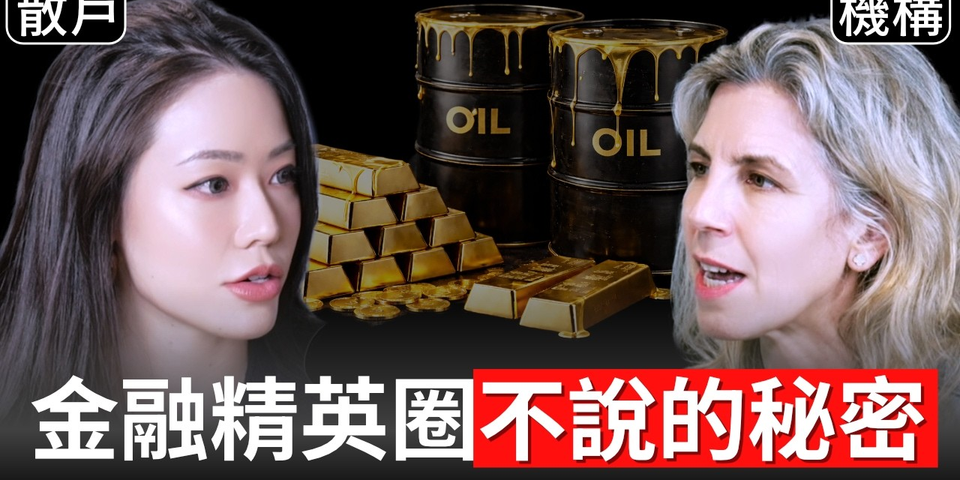
This episode features an in-depth interview with Jennifer Ilkiw, President of ICE Futures US, exploring how global commodity futures markets operate. ICE, originally founded as a cotton exchange in 1870, has evolved into one of the world's most important futures trading platforms, covering soft commodities like coffee, sugar, cotton, and orange juice, and holding global pricing power for cotton and coffee. Jennifer shares key differences between institutional and retail traders: institutions primarily hedge, while retail traders are drawn to volatility. She also points out that as institutional investors continue entering the cryptocurrency market, the convergence of traditional finance and crypto will be a major trend over the next 5-10 years.
Speaker Profiles
Jennifer Ilkiw is President of ICE Futures US (Intercontinental Exchange), promoted to the role in June 2022. She holds a BA in Economics from Queen's University (Canada) and an MBA from the University of Toronto. With over 18 years at ICE, she previously served as Head of Asia Pacific, based in Singapore for nearly 20 years, where she led ICE's acquisition of the Singapore Mercantile Exchange (2014) and the subsequent development of ICE's first exchange and clearing house in the region. She has witnessed ICE grow from just 300 employees in 2007 to 12,000-13,000 today.
Bonnie Chang is a leading Taiwanese crypto KOL who runs the "Bonnie Blockchain" YouTube channel (@bonnieblockchain) with over 416K subscribers. She began creating content during the 2021 bear market and quickly became one of the most influential cryptocurrency content creators in the Chinese-speaking world.
How Global Commodity Futures Markets Work
ICE's History and Core Functions
ICE Futures US traces its origins to a cotton exchange established in 1870. After more than 150 years of development, it has become a critical global futures trading platform. Its primary soft commodities include coffee, sugar, cotton, and orange juice, with pricing power that directly influences global markets. Jennifer emphasizes that the core function of futures markets is price discovery and transparency -- without price discovery, markets cannot function effectively.
Physical inspection processes are crucial for maintaining market quality. For cocoa beans, inspectors open containers for sampling, smell testing, and quality checks. For coffee, trained "cuppers" brew and taste samples to determine quality grades. These rigorous physical inspections ensure the quality of commodities represented by futures contracts.
Global Pricing Power for Agricultural Products
Coffee comes primarily from Brazil, while cocoa originates from Ivory Coast and Ghana. Global price trends for these agricultural products are reflected through futures markets, allowing producers to understand pricing trends and determine optimal selling timing. Even China has apple futures contracts with significant trading volumes, demonstrating the universality of futures markets in global agricultural trade.
Institutional vs. Retail Traders: Fundamental Differences
Institutional Hedging Logic
Jennifer clearly states that institutional traders enter futures markets primarily for hedging, not pure speculation. They need to manage risks from commodity price fluctuations, making futures markets essential risk management tools. For example, coffee importers can lock in procurement costs through futures contracts, avoiding losses from price increases.
She uses a vivid analogy: retail traders are like "grass" -- they constantly need to find new clients; they're like "a box of tissues" -- once used up, you need to find new ones. Retail traders focus on volatility itself rather than the actual value of the underlying asset, forming a stark contrast with institutional long-term hedging strategies.
Volatility and Trading Volume
Market volatility and trading volume have a complex relationship. Jennifer offers an interesting observation: higher volatility does increase trading volume, but when volatility becomes excessive, traders tend to step back and observe. She puts it this way: "Prices go up like an escalator, but come down like an elevator." Upward movements have milder volatility, while downward movements are more violent.
January 2025 was the strongest trading month in ICE's history, showing that market participants are willing to trade actively under the right conditions.
Convergence of Crypto and Traditional Markets
Institutional Entry
Jennifer observes that institutional investors have entered the cryptocurrency market and "won't pull back." While institutions briefly entered and then exited during the 2021 crypto winter, the situation has changed -- "they're here now." This trend will continue to develop over the next 5-10 years.
For institutional investors, barriers to entry in crypto markets still exist. Jennifer recommends that institutions seek trusted index providers (such as CoinDesk 20) to gain crypto exposure rather than purchasing individual crypto assets, providing more transparent risk exposure.
Regulatory Differences for Perpetual Contracts
Perpetual contracts in cryptocurrency markets receive different regulatory treatment in traditional markets. In the US, perpetual contracts are classified as "swaps" rather than futures contracts, requiring compliance with CFTC regulations and margin requirements. This regulatory difference affects how institutional investors participate in crypto derivatives markets.
Risk vs. Uncertainty in Risk Management
As a seasoned risk manager, Jennifer makes a profound distinction: facing "risk" stops people from acting; facing "uncertainty" actually encourages action, because there's an opportunity to make money.
She illustrates with practical examples: tariff adjustments, fires, droughts, and wars all create trading opportunities. These events bring uncertainty rather than quantifiable risk, and risk managers may choose to take on these positions after assessment.
Additionally, Jennifer mentions that autonomous vehicle technology will have far-reaching effects: fewer accidents, reduced insurance demand, lower steel demand -- changes that will reshape the automotive supply chain.
Core Principles of Trading Infrastructure
Jennifer emphasizes that trading infrastructure should remain neutral and reliable, continuing to operate regardless of market conditions. When crypto markets experienced extreme volatility in 2021, many platforms suspended withdrawals or trading, but traditional futures markets never stopped -- even during COVID-19, markets only adjusted trading hours rather than ceasing operations.
She points out that if futures markets stopped operating for a week, the entire world would descend into chaos: no pricing, failed risk management, supply chain disruptions. This highlights the critical role of futures markets as global financial infrastructure.
Practical Advice for Traders
Watch Supply-Side Factors
Jennifer advises traders to closely monitor weather, fires, droughts, and other supply-side factors. These directly impact agricultural production and consequently futures prices. For instance, frost in Brazil could reduce coffee bean output, while drought in Ghana could affect cocoa production.
Choose Trustworthy Trading Platforms
For investors interested in entering futures or crypto markets, Jennifer recommends choosing platforms that meet regulatory requirements and offer transparent pricing mechanisms. Institutional investors should prioritize regulated exchanges and index providers to ensure investment security.
Jennifer's Personal Success Habits
At the close of the interview, Jennifer shares her habit for maintaining peak performance: waking up at 5:15 AM every morning for one hour of exercise. This disciplined routine helps her maintain physical and mental health alongside demanding management responsibilities.
Conclusion
This episode reveals the inner workings of global commodity futures markets, from ICE's historical development and price discovery function, to behavioral differences between institutional and retail traders, to the convergence of traditional markets and cryptocurrency. Jennifer Ilkiw's insights provide not only professional market analysis but also help investors understand the importance of risk management. As institutional investors continue entering the cryptocurrency market, the boundary between these two worlds will increasingly blur, and investors will need to understand both traditional financial instruments and emerging digital assets to succeed in future markets.