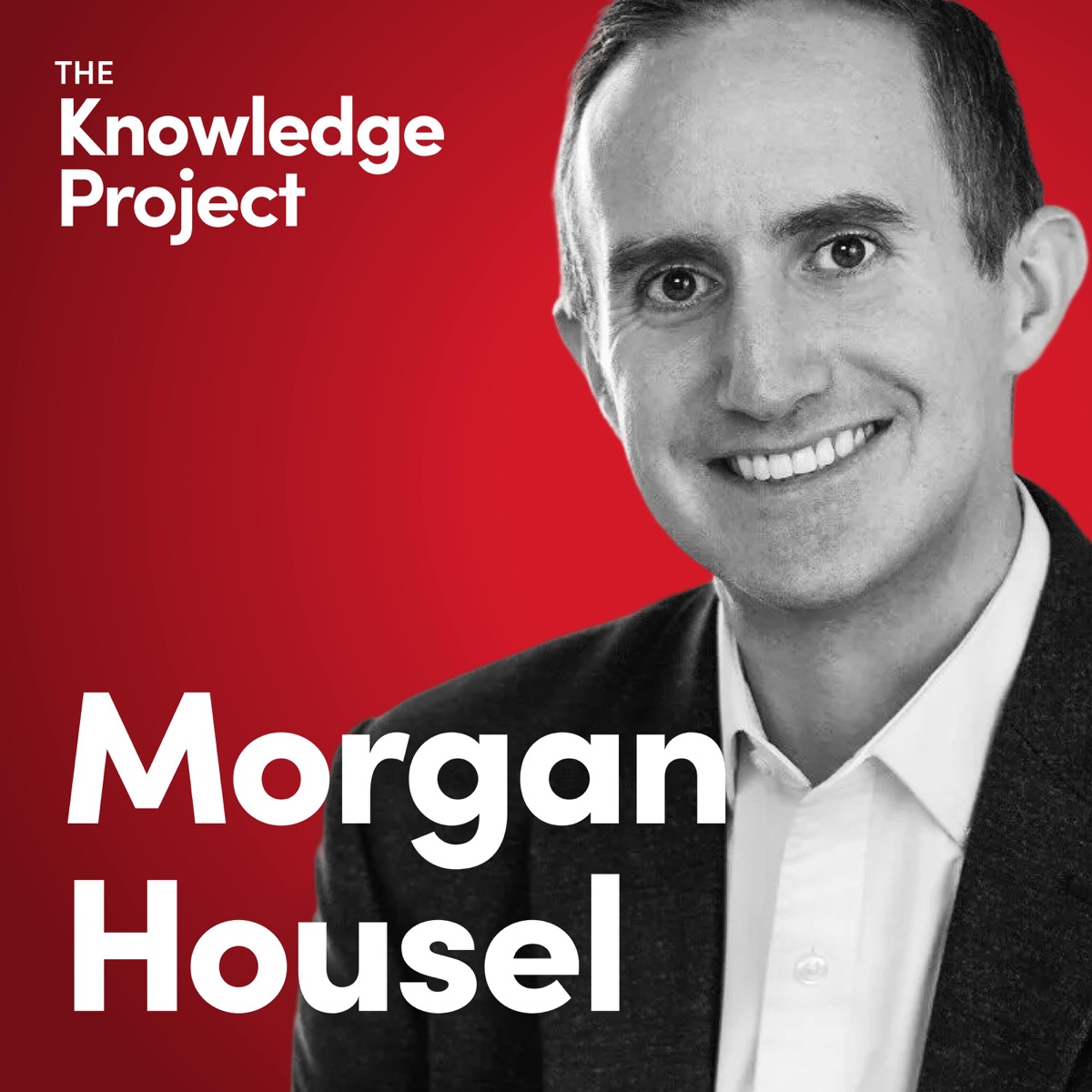
Morgan Housel: Wealth is What You Have Minus What You Want
Morgan Housel: Wealth is What You Have Minus What You Want
Based on a transcript from The Knowledge Project podcast featuring Morgan Housel (partner at Collaborative Fund and bestselling author of The Psychology of Money) in conversation with Shane Parrish.
Executive summary
Morgan Housel, who has sold over 10 million books on money psychology, shares the surprisingly simple framework he uses to build wealth and find contentment. His core thesis: wealth is what you have minus what you want. Managing the "what you want" side of the equation is often more controllable—and more important—than maximizing income.
Key insights from this conversation:
- Money works like a vaccine, not a performance-enhancing drug: It can prevent a lot of misery, but it won't make you wake up happy
- Happiness vs contentment: What people actually want is contentment ("I'm good, I have everything I need"), not constant happiness, which is fleeting like humor
- Independence exists on a spectrum: Every single dollar saved is an "independence claim check" that gives you value today, not just in the future
- Survival is the key to wealth: If you sum up doing well financially in one word, it's survival—endurance through inevitable volatility
- The simplest investing strategy: Dollar cost average into index funds, hope to own them for 50 years, and that's it
What money can and can't do for you
Housel makes a crucial distinction: money reduces bad days but doesn't necessarily create more good days. He compares it to a vaccine:
"I think money can be more like a vaccine where it can prevent a lot of misery, which is great. Vaccines are wonderful. We don't have polio. But you and I don't wake up in the morning being like, 'Oh, I'm so glad I don't have polio.'"
The trap: people want money to work like a performance-enhancing drug—something that makes you feel "on fire." For short periods, it can. But happiness, like humor, is fleeting. You laugh at a joke for minutes, not years.
What people actually want is contentment: the feeling of "I'm good. I have everything I need and most of what I want. And if there's more to come, that's the cherry on top."
Housel suggests most people can achieve contentment at a lower income than they think—with constant work and the right mental framework.
The independence spectrum: every dollar is a claim check
A core reframe in Housel's thinking: saving money isn't "delayed gratification"—it's purchasing independence that you get value from right now.
"I've always viewed it as purchasing independence for which I get value out of right now, today. There's nothing delayed about saving this money because I like waking up tomorrow morning and being like, there's a big cushion here."
He describes independence as a spectrum:
- Level 1: Having 0
- Level 13: Not needing to work anymore
Every dollar saved widens your "channel of endurance"—the range of unknowns and setbacks you can survive. The narrower your channel, the more vulnerable you are to life's inevitable volatility.
Survival: the one-word summary of financial success
If Housel had to summarize doing well financially in one word, it's survival.
"So much about compound interest, not just with money, but with relationships and careers and friendships comes down to what can you endure? How much—how many unknowns and the depths of those unknowns can you endure and survive?"
This connects to compounding: 99% of Warren Buffett's net worth was accumulated after his 65th birthday. The numbers get enormous at the end—but only if you survive to get there.
The psychological challenge: everyone has an "uncle point" where they cry uncle and can't handle more pain. Most people don't know their tolerance until they experience real crisis (like COVID, which tested Housel's own psychology despite writing about volatility for years).
The psychology of contrast and downgrades
Housel shares a key insight about wealth psychology: it's not how much you have, it's the contrast to what you had before.
The classic example: Would you rather have a net worth of 2 million), or 200,000)? Psychologically, most people would rather have the latter, even though it's half as much.
He felt "richest" as a teenager with 20 felt enormous. A billionaire with a private chef eating Michelin-star meals three times a day doesn't feel the luxury because there's no contrast.
"When everything is great, nothing feels great. It's all—what you want is contrast, contrast, contrast."
How Housel actually invests: painfully simple
Housel's entire investment approach fits in a few sentences:
- Dollar cost average into index funds
- Hope to own them for 50 years
- That's it
His entire net worth: a house, cash, Vanguard index funds (primarily VTI—Vanguard Total Stock Market), and shares of Markel (where he's on the board).
He keeps 20-30% in cash—which any financial advisor would call "way too much." But he values sleeping at night and acknowledges a nugget from his past that left him with lower self-confidence about his future earning ability.
"My painfully simple finances, I bet over the course of a lifetime, not in any given year, but over a lifetime, if you compared it to someone whose finances were very complicated with all kinds of transactions—not only would I be likely to match those, but probably exceed them. And I did it with virtually zero effort."
When he receives book royalty checks: 40% to taxes, the rest into stocks—the exact same day, regardless of market conditions. He doesn't try to time anything.
The housing crisis: downstream from zoning
Housel argues affordable housing is "the single biggest social problem" because so many other problems are downstream from it:
- The drug crisis
- The fertility crisis
- Political degradation (people who don't feel invested in their community are more willing to "burn the place down")
His blunt assessment: the problem is easy to solve and is literally a choice. The constraint is zoning—not land, capital, or demand. Tokyo, a massive city, has relatively affordable housing because they build relentlessly.
He cites Tucker Carlson's heuristic: "A good proxy for the health of a country is whether a 28-year-old can purchase a house."
Raising kids with money: safety net, not fuel
Housel's philosophy on kids and wealth: protect the downside, but don't be the fuel.
- He wants his kids to know: if you fall on your face, I'll be there to catch you
- But also clear: he's not going to just write them checks
His parents did this inadvertently—never spoken, but intuitively understood. It gave him confidence to take risks (move to a new city, try new things) knowing he wouldn't be homeless if it failed.
On the "spoiled kids" concern: he reframes it as progress. Your immigrant grandparents' goal was for their grandchildren to look "spoiled" by comparison. That's the point of generational advancement.
The real goal: raise kids who are self-sufficient and can keep it going on their own, regardless of their starting lifestyle.
The Vanderbilt cautionary tale
Of all the Gilded Age robber baron families, Housel argues the Vanderbilts did the worst with their wealth. The Rockefellers and Carnegies built libraries and institutions that still exist. The Vanderbilts squandered the equivalent of hundreds of billions.
The problem: Cornelius Vanderbilt wanted no one in his family to ever suffer again. But this created heirs who were puppets in their own lives:
"The money was their dictator. The money told them who they could be. It told them where they could live. It told them what their personality could be. It told them what they could value."
Many wanted completely different lives—farming, simplicity—but the "Vanderbilt heir" title demanded mansions, balls, and yachts. Most were miserable.
The first to escape? Anderson Cooper, who got the "privilege to be himself"—not because he inherited billions, but because the money had mostly run out.
Status spending: when does it make sense?
Housel wears a collared shirt for the interview—not because he'd wear it at home on Saturday, but to fit in. Is that signaling? Yes. But it's signaling to fit in and be accepted, not to show off.
The dangerous version of status spending: trying to impress strangers who aren't even watching.
His heuristic for authenticity: What would you do if nobody was watching?
- His wife would garden exactly as she does now
- He would travel exactly as he does now
- If there's nothing in your lifestyle that others would give you grief about, you're probably "just a sheep going along with what society told you to want"
The gut feeling framework for big decisions
Contrary to what lifestyle gurus suggest, most of Housel's major decisions were "spur of the moment and pretty haphazard":
- Becoming a writer
- Moving cities
- Having kids (no deep analytical conversation—just "I don't know, I guess we should do it")
His conclusion: gut feelings tend to be pretty accurate. They're not random—they're crystallized knowledge you can't verbalize but intuitively know.
The chess analogy: grandmasters have an instinctual move. 99.9% of the time, that's the move they make. They take time to verify, not override.
The one exception: be much more careful with irreversible decisions (reputation, trust) than reversible ones (career, location—hard to reverse but possible).
Advice for living paycheck to paycheck
Housel offers two frameworks with empathy:
- Wealth = what you have minus what you want
You're more in control of the "what you want" side than the "what you have" side. Doubling income is possible but hard. Lowering expectations—even while staying ambitious—is more within reach.
- Independence is a spectrum
Don't think: "I can't save $5,000 a month, so why save anything?"
Every dollar makes a difference. That 10 becomes the oxygen of your life when you lose your job or face a crisis. It lets you make different decisions than you would have.
What success means to Housel
Two definitions:
- Not disappointing the few people who matter
"There's no amount of financial material success in life in which I could look back at my life and say, 'I had a great life' if I really disappointed my kids or my wife or my parents."
- Loyalty to people who deserve it
He distinguishes between those who deserve loyalty (small list) and those who don't. Giving loyalty to those who deserve it—his kids, his boss Craig Shapiro who bet on him early—is "unbelievably rewarding."
"It's not just rewarding to the other person. It's rewarding for you personally."
Key takeaways
- Contentment over happiness: Aim for "I'm good" rather than constant euphoria
- Independence now, not later: Savings purchase independence you benefit from today
- Survival is everything: Wealth comes from enduring the inevitable volatility
- Keep it simple: VTI + time beats complexity for most people
- Nobody's watching: Stop trying to impress strangers who don't care
- Control expectations: Wealth = have minus want, and "want" is more controllable
- Trust your gut: For most big decisions, your intuition is probably right
- Don't disappoint the few who matter: That's the real measure of success
Learn more about Morgan Housel at morganhousel.com or follow him on X.