AI Agent Industry Weekly W21: Hybrid/On‑Prem Push + Connectivity Consolidation (OpenAI×Dell, Stainless, Gemini Spark)
This issue covers May 18 to May 24, 2026 (Asia/Taipei). The industry storyline this week is clear: agents are expanding from “cloud API capability” toward both ends of the spectrum—into regulated enterprise hybrid/on‑prem deployments, and into standardized tool/connectivity layers (and even M&A).
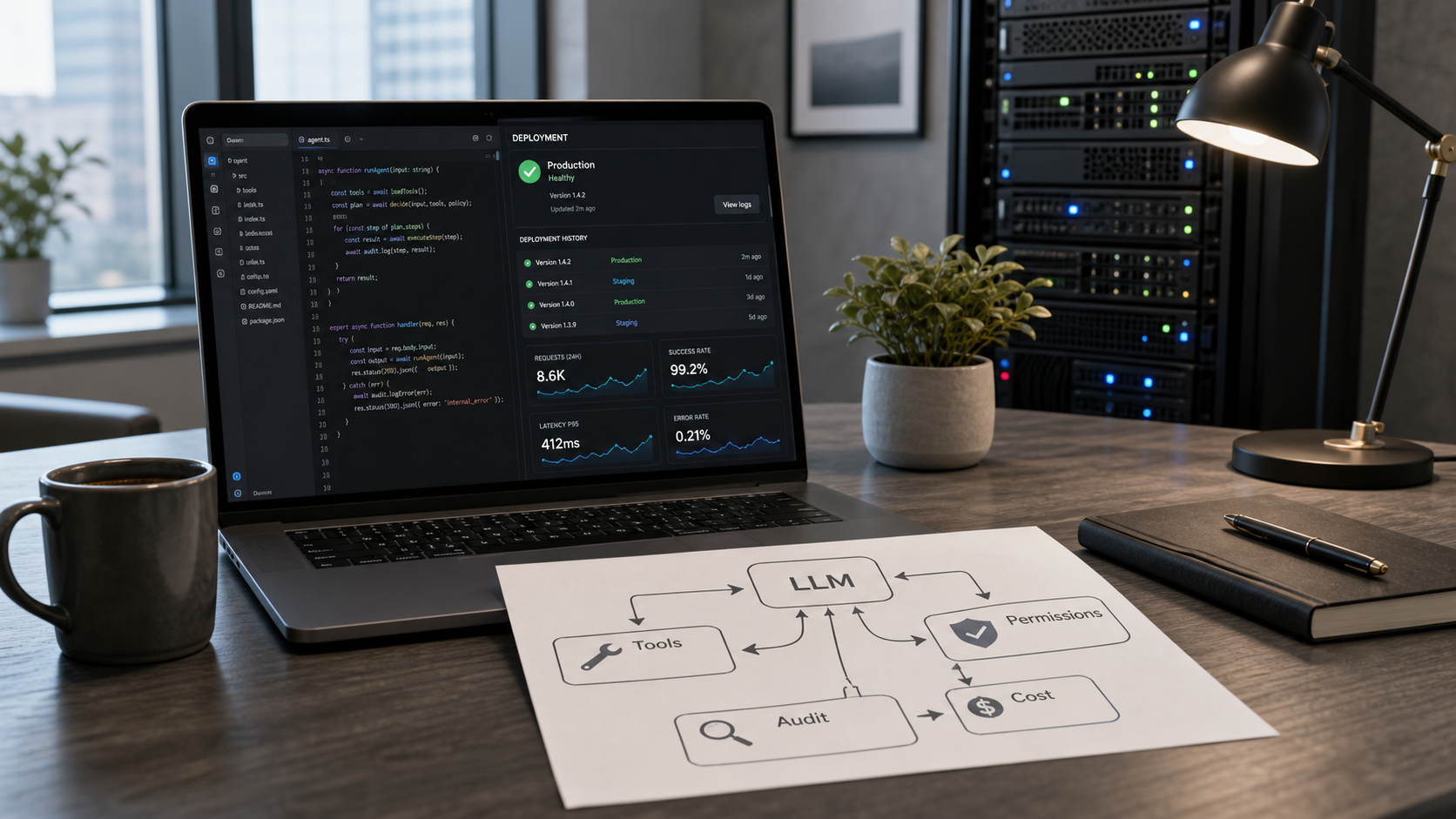
In other words: the market is starting to treat agents as systems that must be delivered, governed, and placed close to data and permission boundaries—not as demos.
1) OpenAI × Dell: Codex moves into hybrid and on‑prem enterprise environments
On May 18, OpenAI and Dell Technologies announced a partnership centered on bringing Codex into hybrid and on‑prem enterprise environments—especially important for organizations with hard constraints on data sovereignty, compliance, and isolation.
- OpenAI: OpenAI and Dell Technologies partner to bring Codex to hybrid and on‑premises enterprise environments (2026-05-18)
My take: a major 2026 battleground is “who can take agents into the hardest environments.” When you can’t ship data to public clouds and can’t grant broad tool permissions, deployability, auditability, cost control, and rollback matter more than another benchmark point.
2) Dell: “production‑ready” agentic AI from deskside to data center
Dell’s DTW 2026 announcements (May 18) emphasize placing agentic AI where data lives—deskside/workgroup, edge, and data center—to reduce data movement friction and risk. The key signal: Dell positions agentic AI as a deliverable, production‑ready offering, not a model showcase.
- Dell press release: Dell Technologies Delivers Production-Ready Agentic AI from Deskside to Data Center (2026-05-18)
- Dell blog: The Agentic AI Continuum: Bringing AI Where Your Data Lives (2026-05-18)
For builders, this pushes agent adoption into a platform/IT problem space: data location, network isolation, authorization + audit, and procurement/TCO.
3) Anthropic acquires Stainless: the tool/connectivity layer becomes strategic
On May 18, Anthropic announced it has acquired Stainless. If agents are “model + tools + connectivity,” Stainless-like infrastructure matters because it productizes API/SDK/tool integration into something maintainable at scale.
- Anthropic: Anthropic acquires Stainless (2026-05-18)
My take: competition is shifting toward “who controls the tool/connectivity layer.” As MCP, SDKs, connectors, auth, and audit harden into platform capabilities, M&A becomes a fast path to integration.
4) Google I/O: Gemini Spark and Gemini updates productize the “build agents” workflow
At I/O 2026, Google introduced Gemini Spark as a workflow/tooling layer for building agents, alongside a stream of Gemini updates described in official posts.
- Google: I/O 2026: Gemini Spark is a new workflow for building AI agents quickly (2026-05-19)
- Google: I/O 2026: Gemini 3.5 Flash is now faster, smarter and more efficient (2026-05-19)
- Google: I/O 2026: Gemini Omni is here — introducing our most powerful multimodal Gemini model (2026-05-20)
The actionable signal isn’t just “new models,” but better workflow integration: who can make prompting, tool use, testing, observability, and deployment feel like one pipeline wins distribution.
5) Market signal: enterprise AI coding agents enter a “competitive realignment” phase
Gartner’s May 20 press release explicitly frames enterprise AI coding agents as entering a new expansion phase with competitive realignment—an indicator that procurement + governance will become a first‑class conversation.
- Gartner: Gartner Says the Market for Enterprise AI Coding Agents Is Entering a New Phase of Expansion and Competitive Realignment (2026-05-20)
6) China/Asia: cloud packaging (“Qwen Cloud”), MCP adoption, and realtime capabilities
Three keywords for the China/Asia track this week: cloud packaging, model cloud (“Qwen Cloud”), and MCP tool ecosystem adoption.
- Alibaba Cloud Summit (Hangzhou): 阿里云峰会 2026 (2026-05-20)
- Alibaba developer community: 阿里云峰会2026:“千问云”重磅发布 (2026-05)
- NBD (Tencent Cloud signal): 腾讯云升级DeepSeek 20B模型,混元-DeepSeek支持“更强推理” (2026-05-22)
- Qwen blog (realtime infra): Qwen Live Translate (2026-05-19)
Realtime, low‑latency capabilities increasingly look like foundational infrastructure for voice/customer‑service agents, not “nice to have” features.
My takeaway this week
The key isn’t “who shipped another model,” but three parallel shifts:
- Hybrid/on‑prem: OpenAI×Dell pushes agents into regulated boundaries.
- Platform delivery: Dell packages agentic AI as production-ready offerings.
- Connectivity consolidation: Anthropic turns integration into a strategic asset via acquisition.
Watchlist for next week
- Which verticals will OpenAI×Dell prioritize, and will reusable “on‑prem Codex deployment templates” emerge?
- Will Gemini Spark become a de facto workflow layer for agent builders (test → observe → iterate)?
- How will Anthropic’s Stainless acquisition reshape MCP/SDK/connector ecosystem dynamics?
- How will “model cloud” products (like Qwen Cloud) segment pricing by tools, concurrency, audit, and enterprise integrations?
- Will enterprise governance for coding agents (audit, permissions, supply-chain security) standardize quickly in H2 2026?
References
- OpenAI, OpenAI and Dell Technologies partner to bring Codex to hybrid and on‑premises enterprise environments (2026-05-18)
- Dell Technologies, Dell Technologies Delivers Production-Ready Agentic AI from Deskside to Data Center (2026-05-18)
- Dell, The Agentic AI Continuum: Bringing AI Where Your Data Lives (2026-05-18)
- Anthropic, Anthropic acquires Stainless (2026-05-18)
- Google, I/O 2026: Gemini Spark is a new workflow for building AI agents quickly (2026-05-19)
- Google, I/O 2026: Gemini 3.5 Flash is now faster, smarter and more efficient (2026-05-19)
- Google, I/O 2026: Gemini Omni is here — introducing our most powerful multimodal Gemini model (2026-05-20)
- Gartner, Gartner Says the Market for Enterprise AI Coding Agents Is Entering a New Phase of Expansion and Competitive Realignment (2026-05-20)
- Alibaba Cloud, 阿里云峰会 2026 (2026-05-20)
- Alibaba developer community, 阿里云峰会2026:“千问云”重磅发布 (2026-05)
- NBD, 腾讯云升级DeepSeek 20B模型,混元-DeepSeek支持“更强推理” (2026-05-22)
- Qwen, Qwen Live Translate (2026-05-19)